The Ukrainian Leftists Trying to Change Die Linke
What is the Ukrainian Left Initiative — and how is it changing Germany’s Die Linke's stance on Ukraine today? We discussed this and more with ULI activist Mykhailo Mustafin.
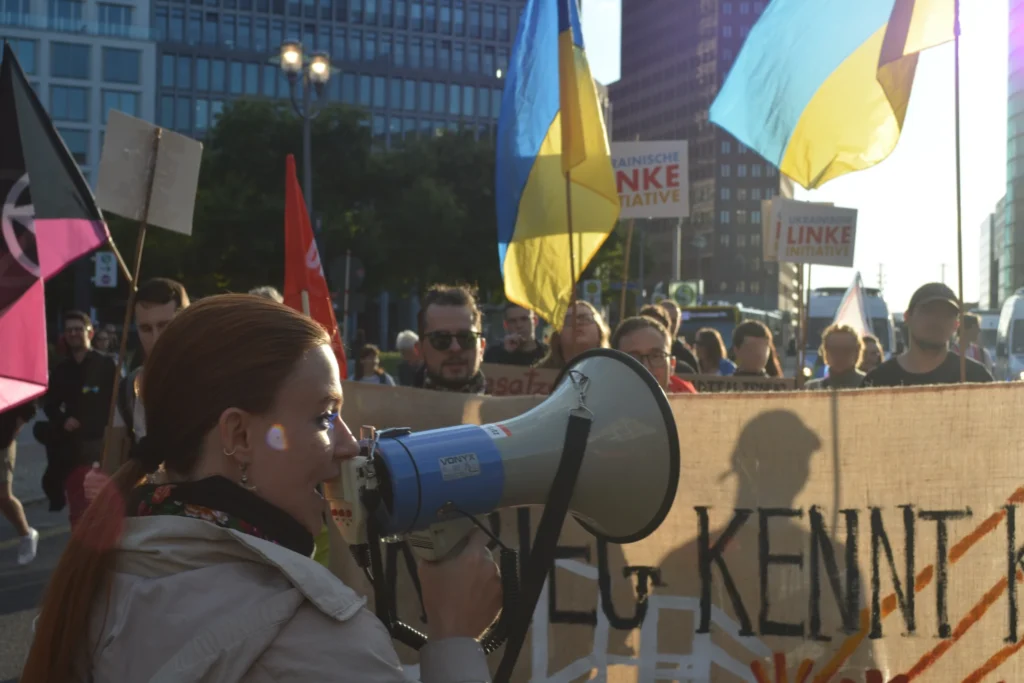
Over a million Ukrainians now live in Germany — and most of the organizations representing them are either deliberately apolitical or focused on a single issue: support for Ukraine. A left-wing perspective is almost entirely absent in this milieu, and that’s hardly surprising: in Ukraine itself, left-wing ideas are viewed with suspicion, while European left parties are all too often associated with a “pacifism” that in practice means refusing to support the Ukrainian resistance.
It is in this gap that the Ukrainian Left Initiative emerged — a hub for the left-wing and progressive Ukrainian diaspora. We spoke with ULI activist Mykhailo Mustafin about how the organization came into being, how it works with Die Linke, why the rights of Ukrainian refugees keep falling off the agenda, and whether left-wing ideas can take root among Ukrainians abroad.
⁂
Yakovyshyn: I’ll start with probably the simplest question — about the Ukrainian Left Initiative. When and how did it come about?
Mustafin: We’ve been around for almost a year and a half now. It all started with conversations that had been going on for a long time in the Ukrainian left diaspora in Berlin about how it would be good to have an openly left-wing project for Ukrainians — one that could represent Ukrainians’ interests and advocate for supporting Ukraine, but do so specifically from a left-wing perspective. And also to have a safe space for the left-wing or progressive diaspora, people who think of themselves in those terms.
These kitchen-table conversations had been going on since about 2024, I suppose. But the immediate trigger was the Bundestag elections in early 2025; by then Sahra Wagenknecht had already split from Die Linke for good. Many new members had also joined. We didn’t know their views on Ukraine, and for some there were signs it may not have been a priority, though they broadly sympathized with the Ukrainian resistance. And when Die Linke, in its new form, won an a surprisingly strong 8.8%, we decided this would be a good occasion to create what had been talked about before. And, alongside that, to work directly on promoting a pro-Ukrainian agenda from a left-wing perspective within Die Linke itself. Because, although we were very glad that the completely unhinged pacifists and Russophiles had by and large left the party, there was still a lot of work to do. And that’s when we actually got started.
Y: And does the Ukrainian Left Initiative, as I understand it, have some kind of formal status within Die Linke? How exactly does the party work in terms of internal caucuses (platforms) and so on?
M: No, we are explicitly not a party structure; we’re non-partisan. We recognize that, on most of our positions, the party closest to us is Die Linke — but at the same time we criticize it very strongly for certain positions, particularly on Ukraine. But the organization itself is not part of the party. We have people who are members of Die Linke and people who are not.
At the same time, relatively recently we created a specifically intra-party project called Netzwerk Gerechter Frieden, or “Network for a Just Peace.” It brings together people inside the party. If we are more of a specifically Ukrainian organization (the working language is Ukrainian, and it’s mainly people from Ukraine who come to us, although there are also, for example, Moldovan citizens who speak Ukrainian — in other words, we don’t choose whom to take and whom not to by passport), then this network, which we’re part of, is a broad association, independent of positions on other issues. By and large, the only common denominator is support for Ukraine and (in most cases) membership in Die Linke.
Y: Okay, I see. So what are your relations with other Ukrainian organizations? As far as I know, there are now more than a million Ukrainians in Germany, and there are organizations that represent Ukrainian interests in a broadly apolitical way — what are your relations with them?
M: Yes, of course, there are many different organizations. Some are more or less apolitical, some are so-called single-issue organizations — focused solely on Ukraine. There are some that are less active than ours but also left-wing or left-progressive. We’re open to cooperation with any organization as long as it isn’t openly right-wing and doesn’t think of itself in those terms. We do joint projects from time to time.
Of course, since in Ukraine — and accordingly in the Ukrainian community abroad — there’s usually a certain skepticism toward left-wing ideas, there’s also a certain wariness about us — not so much whether we’re the “right kind of Ukrainians,” but whether we’re level-headed. But we always say that we absolutely condemn, for instance, Stalinist crimes. We’re not fans of the Soviet Union. We’re simply leftists, and we want to have our own agenda while also advancing those interests of Ukraine that are, in principle, universal human interests.
Y: And do you cooperate with other Ukrainian organizations — both in Ukraine and in Europe, in other countries? And with whom?
M: Yes. We have many people who were at one time, or still remain, in Sotsialnyi Rukh [Social Movement] and Priama Diia [Direct Action]. Some ULI members are current and former editors of the journal Spilne [Commons]. So it’s these organizations we cooperate with first and foremost.
In Europe, we have good relations with Poland’s Razem — we work mainly with its Berlin branch, but relations are good overall. We also have contacts, for example, with the Czech socialists, Budoucnost. It’s a very small party, but we have some contacts with them too. But above all, of course, we focus on our work in Germany. We have groups in Berlin, as well as a very active group in Leipzig.
Y: Do you also deal with the rights of Ukrainian refugees, migrants, and so on?
M: We don’t provide direct legal assistance yet. There are plans for it, but for now they’re still in an embryonic state, because that requires building a separate infrastructure — and besides, as an organization we have so far been focused on politics, not on law.
But it sometimes seems that when a more or less apolitical or single-issue Ukrainian organization treats support for Ukraine as a matter of foreign policy, the rights of Ukrainian refugees often get deprioritized, or simply aren’t talked about. All the more so because, unfortunately, in Germany especially, cuts to the rights of Ukrainian refugees are now being presented, among other things, under the guise of supporting Ukraine — which we find deeply cynical.
So in our statements and actions, we try not to forget that support is needed both for Ukraine as a state and for Ukrainians outside its borders. Not because they’re Ukrainians, but because most of them are also refugees.
We also work on these issues within Die Linke, at the level of individual Länder and of Germany as a whole. We work on them both independently and in alliance with other associations within the party. For example, together with the migrant working group Linkskanax, we prepared joint motions for this summer’s federal party congress.
Y: I have a question that might be a bit naive and very broad. Do you think it’s possible now, being in Germany — where, unlike in Ukraine, attitudes toward left-wing parties and organizations are more relaxed — to make the left-wing idea more popular among Ukrainian refugees, migrants, and Ukrainian communities in general? You mentioned that you place a lot of emphasis on the fact that leftists don’t have to be pro-Stalin or pro-“sovok” [a derogatory term for the Soviet system and mindset]. Do you think this is fertile ground for introducing many Ukrainians to left-wing ideas?
M: Yes, of course, I’d like to believe it’s very much possible. Sometimes we privately see ourselves as a kind of Petri dish for left-wing ideas among Ukrainians abroad. And of course we try to tell other Ukrainians about it. But I’d say that the more just the peace for Ukraine is, the fewer unhealthy tendencies there will be after it’s established. And that’s why we, as leftists, have a stake in a just peace, among other reasons. Among the purely political reasons: so that we can calmly promote a progressive agenda — at least an economic one — in Ukraine without people saying that we’re, I don’t know, fans of the USSR.
Is it realistic? Unfortunately, I can’t say, because planning has been difficult lately, especially given how the geopolitical situation is developing. So I won’t say that we can or will do it, but we very much want to believe it’s possible.
Y: And roughly how many members does the Ukrainian Left Initiative have now?
M: Those who take part in our activities regularly — about 20. That’s the core group. But on top of that there are close to a hundred supporters who know about us, sympathize with us, and regularly come to our events.
Y: There’s a piece available online, on a Russian-language media outlet, in which one of your organization’s representatives says that when Die Linke invites you to events, it’s always together with an organization of Russian-speaking leftists. Is that so, and why?
M: Let me explain. Of course, when we talk to the party itself, we have to speak their language. Our goal is to convince the party, or to advance the position within the party, that Ukraine has to be supported. And if they want to hear about this in the context of both Ukrainian leftists and Russian leftists wanting Ukraine to be supported — and the ultimate goal is, after all, support for Ukraine, including with weapons — then yes, especially when dealing with the party, we’re in principle prepared to appear together, and we do. It’s a a trusted organization.
Of course, there are other organizations from post-Soviet countries that also call themselves left-wing. Such groups are popular in France, for example. La France Insoumise at one point liked to invite them to its conferences, where they’d argue for negotiations and against any military support for Ukraine until certain conditions were met — or against it altogether.
The Russian-speaking leftists don’t do that. I know many of their members. They’re in favor of military support for Ukraine. And, in fact, they’ve also joined our intra-party network for a just peace.
Y: I see. It seems Die Linke is also working on a new program now. As part of this cooperation, is there an exchange of views on Die Linke’s program as a whole, its position on NATO, militarization, and so on?
M: Yes — in fact, one of our concrete goals is for the next program, which is currently being worked on, to contain a truly internationalist and just position on Ukraine. Our work with the party consists of making sure that by the time the program is being drafted, the pro-Ukrainian position is represented strongly enough to have a significant influence on the final program.
As for militarization: for the whole Network for a Just Peace, we wrote a manifesto on anti-militarism. In it we wrote that, of course, we cannot call ourselves militarists — we aren’t. Militarism is bad, but anti-militarism cannot be naive pacifism. I won’t retell the whole manifesto now (full text is available in English), but the gist is that an anti-militarism that doesn’t talk about the victims of militarism — the first and foremost ones — is not anti-militarism.
So we’re working on this, and our aim is to influence the shaping of this program. That’s part of our work with the party.
Y: The last question is a bit hypothetical. What do you see as the best-case scenario for the organization? For all the goals to be achieved — what has to happen?
M: I’d say — keep going and find as many contacts within the party as possible, talk to people, find allies, who sometimes turn up, frankly, in the most unexpected places.
For example, in the summer we started a project on the Russian House and how the Russian Federation uses it to influence German politics. We’re still carrying out a large study: gathering a factual base and arguments, and reporting our findings to the party. But we in no way expected that we would soon be publicly backed on this by people from both the board of Die Linke’s Berlin branch and its parliamentary group. So we see that the party is changing, and that’s why we need to find allies, we need to talk — find common ground on some things and stand our ground on others, because that, of course, is respected.
And in parallel, talk to the Ukrainian diaspora, show them that they now have a safe space where we can talk about a lot of things. We can criticize German policy in general — both on support for Ukraine and on Ukrainian refugees — we can criticize Die Linke, we can even criticize certain tendencies within Ukraine itself, and not feel like we’re walking on eggshells.
Especially early on, when I told other people about the organization, they were skeptical. I’d say, “Well, we’re working on Die Linke’s program, on the internal party debate.” And they’d be like, “Right, well, good luck. I don’t think you’ll pull it off.”
And I’d reply, “If we don’t pull it off, then at the very least we’ll create this space for the Ukrainian diaspora and contribute to building it, to helping Ukrainian women and men in Berlin find their place in Germany.” But I don’t say that anymore, because, as we can see, the party is gradually changing — just as the Ukrainian diaspora itself is changing.

Want to publish your article on Zirochka?
Submit it via the form, and we’ll publish it on the website
More articles
-
 # Social democracy
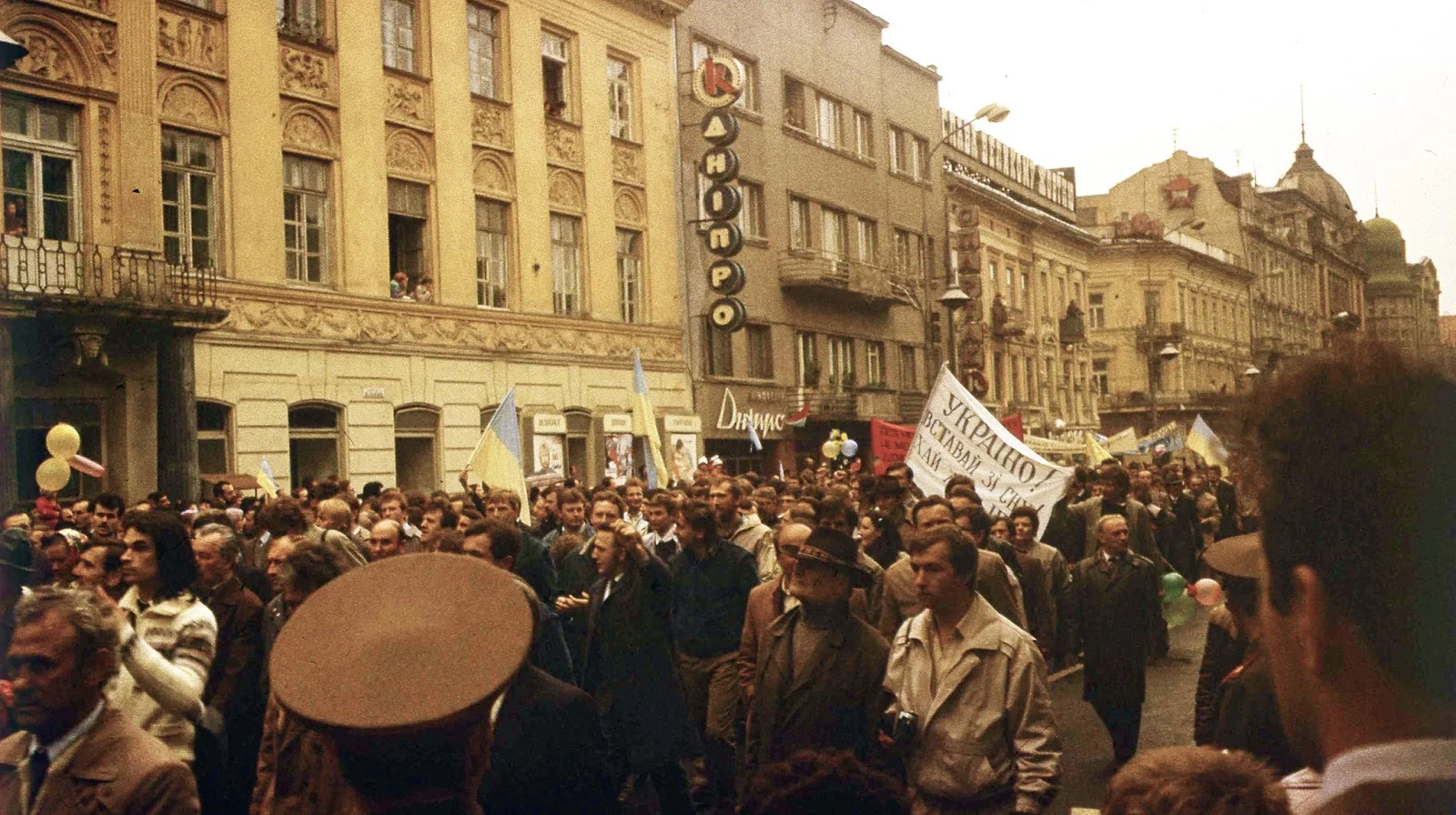
The Rebirth of Ukrainian Social Democracy in Lviv
In the late 1980s, a group of young idealists undertook one of the first efforts to resurrect social democracy on Ukrainian soil. Discover the history of this endeavour in our feature.
-
 # Інтерв'ю
Богдан ФЕРЕНС: «За прагматизм, але з чіткими орієнтирами»
Чому соціал-демократія досі не прижилася в Україні і навіщо вона країні після війни — розмова із засновником СД Платформи Богданом Ференсом.
-
 # Social democracy
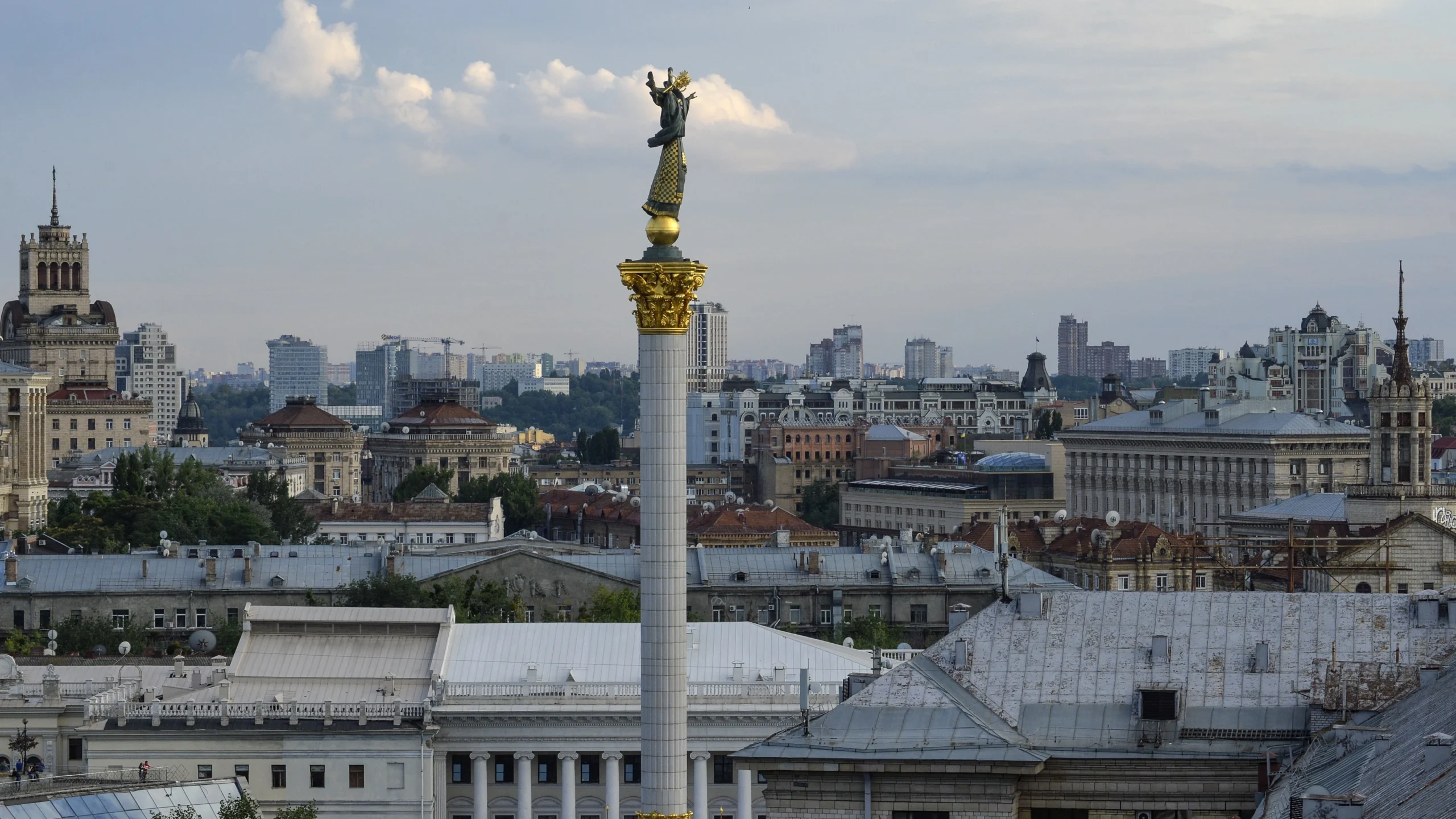
The 1997 Kyiv Declaration: a Retrospective
Delegates from eighteen European countries met in 1997 in Kyiv to draw up the principles of young European social democracy. Does the document still hold up?