Bohdan FERENS: “For Pragmatism, but with Clear Bearings”
Why has social democracy still not taken hold in Ukraine, and why will the country need it after the war? A talk with SD Platform founder Bohdan Ferens.
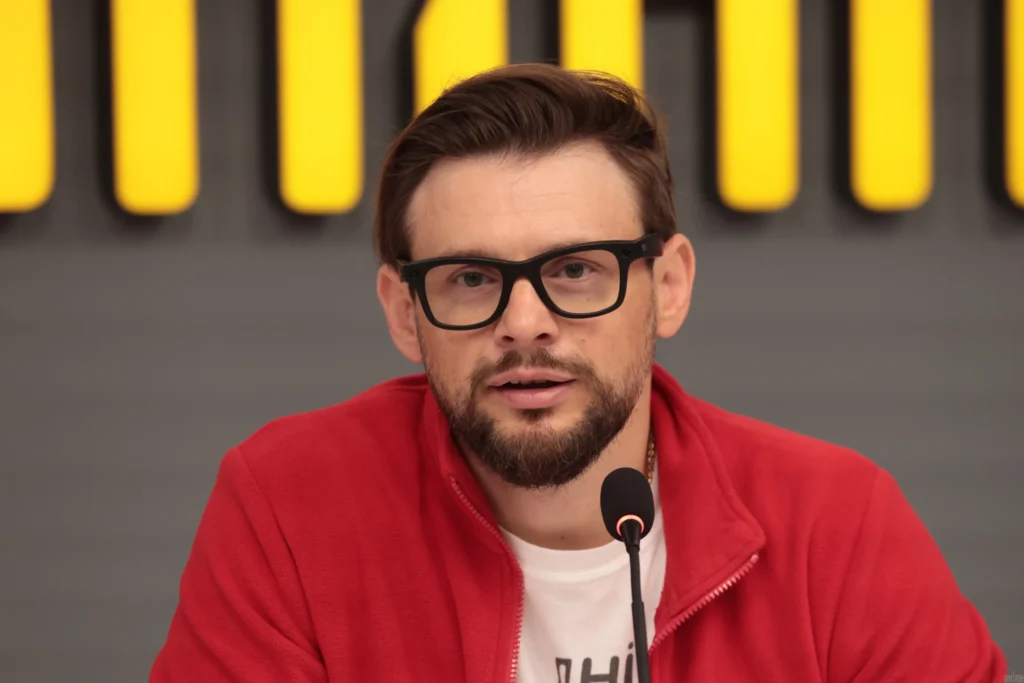
Bohdan Ferens holds a PhD in political science and is the founder of SD Platform, an NGO that has brought together young progressives from across Ukraine since 2012. We talked about what social democracy means today, why it is so hard to make popular in Ukraine, whether the centre-left could ever unite in a single party, and who inspires him.
⁂
What does the social democratic idea mean to you?
Wow! An easy one to start with. (laughs)
For me the social democratic idea is, on the one hand, a matter of values and ideology, something understood across most of Europe but not really in Ukraine. On the other hand, it is above all an instrument, one that ought to help ordinary people get affordable education, social services and proper work for decent pay. So it’s a more practical framework of values and ideology, meant to serve the interests of the majority and not the minority.
Do you see a difference between social democracy and what is now called democratic socialism? Or are they one and the same?
Right now I simply don’t see much point in worrying about that, because the Western political space is blurring beyond recognition. Only in narrow circles of enthusiasts and intellectuals do people argue over where there’s more socialism and where there’s more social democracy or democratic socialism. The key threat is that social democracy in Europe is in crisis today. That much is obvious.
So the question is less about theoretical discourses and interpretations than about how far politicians who call themselves social democrats, democratic socialists or progressives in this or that country manage to deliver what they promised voters and to change people’s lives. As Germany and other countries show, they aren’t quite managing it. What’s needed now is not a search for distinctions between very narrow categories, but concrete, practical action that people would feel in their own lives as a change for the better.
You touched on how to make the social democratic idea popular in Ukraine. For many people today, any progressive idea carries negative associations, not least because of the toxic legacy of “social democrats” like Medvedchuk. How do you think these ideas could be made more popular, and how can that legacy be put right?
To be honest, I think the very notion that social democracy can be made attractive in Ukraine right now is somewhat utopian. And I say that even though my colleagues at SD Platform and I have been doing exactly that since 2012, whatever the odds, and I was at it even before.
Why? It isn’t even a matter of Medvedchuk’s legacy. Most people, the young especially, don’t even remember that there was a political outfit called the SDPU(o), or who Medvedchuk is. The key problem, as I see it, lies elsewhere. Social democracy here has always been stuck at the embryonic stage and never grew into anything more mainstream. The left stayed in its bubble. Offering serious competition to the dominant neoliberal milieu, whether in civil society or in politics, has proved all but impossible, and there haven’t been many attempts at it either. So it’s hard to make social democracy attractive to Ukrainians, and in wartime, I think, practically impossible.
But speaking more broadly, you can use concrete actions, steps, initiatives and results to show that values such as freedom, solidarity and equality matter. When you talk to people about values, you find a lot in common. The demand for justice is only growing. And there’s a risk that it will be the forces of the right, perhaps even of a right-socialist bent, that offer very simple answers, and they’re already trying to, to these complex questions of social injustice.
In my view, in the post-war political reality we simply won’t pull through, as a society or as a country, without a healthy centre-left. There will be a furious demand for justice and completely severed ties between key groups of the population: those in Ukraine and those abroad, those who fought and those who didn’t. The social budget will be under enormous strain, what with veterans, the military, medical care and much else besides. And the economic system hasn’t really changed: the clans and oligarchs still dominate it and will go on doing so. So I believe we have to make the idea of a progressive, modern, post-war Ukrainian society a priority.
And not only in words or theoretical debates, but in concrete action. At our level we try to back up our words and values with a reputation built over years, with our cooperation with European social democrats, and with concrete work in Ukraine: for veterans, for the blind community, for young people, for women and young women’s leadership, for educators. Things like that can at least sow a seed of progressive, modern thinking in part of Ukrainian society. After that you’d need another ten or so organisations like this, and tens of thousands of people who really do want the country to be progressive.
Tell us more about SD Platform and what it has achieved over the years.
I founded SD Platform at the end of 2012 together with friends, colleagues and co-founders, and we’re still building it together today.
It’s an independent, values-driven organisation that brings together more than 2,000 young people from different regions of Ukraine, and by now from beyond its borders. Over the years we’ve carried out many important initiatives. In particular, we level young people up in political education and political orientation: some 20,000 to 25,000 young people have gained knowledge, experience and the chance to better understand political processes, free of charge, thanks to our cooperation with international partners such as the Friedrich Ebert Foundation.
Right now our priority is blind and visually impaired veterans. We give dedicated support to this vulnerable group, our heroes. We organise retreat camps where they have opportunities for rehabilitation and socialising, and for advocating their interests, rights and needs. What’s more, we’re now helping to create an Association of Blind Veterans of Ukraine, which, surprisingly, never existed before.
We also work to support educators and medics, and we always try to do it well, creatively and with added value for the people and communities themselves. We also have regional branches, including in Ternopil, Lviv, Kyiv, Khmelnytskyi, Odesa, Dnipro and Zaporizhzhia, so it’s quite a wide network. In wartime, of course, things are harder, and working with young people is much more difficult, but we do what we can and we create opportunities.
We work with the social democratic group in the European Parliament, with the Party of European Socialists, and with social democrats from many countries. SD Platform is a member organisation of the Progressive Alliance, which takes us well beyond Europe, to Latin America, Africa and Asia. We’re also a member organisation of IUSY, the International Union of Socialist Youth, and of YES, the Young European Socialists. That didn’t happen straight away; it took years of work. Today we are effectively the only organisation in Ukraine that is a trusted partner of European social democracy.
That’s the short version, more or less. We run on membership fees, partner projects and cooperation.
There are other NGOs in Ukraine that take broadly left or centre-left positions — Sotsialnyi Rukh (Social Movement), for one. Does SD Platform work with them?
We partner up. They are, by and large, to the left of us. We always invite them to our events and they invite us to theirs. So we have plenty of shared interests, let’s call it that. The approaches differ somewhat because, as I said, we’re more centre-left, while Sotsialnyi Rukh is, I think, an organisation further to the left that mainly partners with left-wing European organisations.
But in my view what the left has always badly lacked is exactly that element of cooperation, instead of this constant marginality where everyone digs away in their own vegetable patch and won’t show any openness or partnership to the outside world. There are some projects, political or quasi-political, that to my mind are more about looking like a labour movement than being one. But it’s always been that way and probably always will be. So everyone has to decide for themselves whom to support and sympathise with, looking first of all at achievements, reputation and, I suppose, years of activity.
Then again, when we started SD Platform, few people believed in us either, and few were ready to support us. Quite the opposite: some even called us Medvedchuk’s backroom operation, because from the start we called ourselves the “New Social Democratic Platform”. On the one hand, that made no sense at all in terms of positioning and image for young people: social democracy, yuck! But on the other, we had set out our values clearly, and that helped us act in a more concrete way, instead of going on “about everything and nothing”.
My next question is a more hypothetical one. You’ve already said, in part, that Ukraine will need a strong centre-left force in post-war reconstruction. But do you believe that different centre-left groups, and perhaps the left as well, could unite in one big political party? This topic seems to have been hanging in the air for some twenty years: attempts are made time and again, and none is ever seen through.
I believe in very little in this life (laughs). Journalists often ask me whether I believe a deal with Trump will work or that sanctions will stop the war. I always answer that I believe in very little in this life.
But I do think we have to strive for a progressive force in Ukraine after the war, one that could gradually win trust and a reputation among citizens. And we should have been working on that all these years too. Only opportunists or oligarchs with some financial interest of their own can afford to conjure up such a force out of thin air. In reality you always need groundwork. You need to raise, let’s say, a whole generation of people who will at least know and understand what it means to be progressive, what social democracy is, whether it is native to the Ukrainian people, whether we have a history of social democracy. And it turns out we do, only for some reason nobody tells you about it, not in schools, not anywhere. So on the one hand it’s like that Hollywood film, Mission: Impossible. And on the other, it’s something worth striving for.
As for mergers, the truth is there’s nobody to merge with (laughs). I don’t think we have any prominent, strong progressive social democratic leaders in Ukraine who might or might not want to join forces. There are organisations: you mentioned Sotsialnyi Rukh, there’s us, perhaps a few others. But to say we’re already political heavyweights known to millions would probably be premature.
So what we should look for instead are partnerships, as long as they’re aimed at solving social problems and helping those who will need it most. Here and there, even in other political camps, there may be politicians, although there are hardly any, who won’t beat their chests about being left-wing or social democrats, but who might in principle support this or that approach to the problems of a Ukrainian society traumatised by war.
I’m more for pragmatism, but with clear bearings, so that this pragmatism as I’ve said, doesn’t turn into political opportunism, where people, citizens, are simply deceived from every side. That’s what matters most.
One last question, a more personal one. Which historical figures, from Ukrainian or European social democracy more broadly, inspire you? Perhaps there’s someone you look to, Volodymyr Starosolskyi, say, and think people should know more about?
Let me say straight away that I’m more of a practitioner than a theorist. So I’ve never paraded any deep knowledge of the works of the great Ukrainian social democrats or socialists, whom, sadly, almost nobody actually knows, apart from a very small circle of interested people.
Certain historical figures really do inspire me; it’s always much easier to explain social democracy through them. I admire Olof Palme. In fact, I recently visited his grave in Stockholm. He was a politician who travelled an interesting and, in some ways, dramatic road, but he did a great deal for a country like Sweden, for the social democratic movement and for his party. And not only in his own country: his internationalism has lived on to this day, in another dimension and form, but it’s there.
As for figures from independent Ukraine, I won’t name anyone. The only one I was lucky enough to work with at one time was Vitalii Shybko. He was international secretary of the Socialist Party. I always say he was the only one who brought European social democracy into independent, post-communist Ukraine; that is, he tried, from within the Socialist Party, to sow the seeds of European social democracy. Working with him was what got me interested in European social democracy. But many people don’t know him either. He was a well-known diplomat and, in his day, a politician, and to my mind he left us too soon.
So I’d advise young people to know their history, but also to watch who is showing the traits of progressive politicians today, and to take their inspiration from those people and from the results of their work. Because the crisis of leadership on the left is felt at European level and beyond. We’ve left behind the era of strong leaders like Willy Brandt, Allende for that matter, and many others. There are no such leaders now, and for the moment none are emerging. But there are the systems and structures that they, among others, built, and that can still work for people. The question is how to revive all of that, modernise it and make it effective.

Want to publish your article on Zirochka?
Submit it via the form, and we’ll publish it on the website
Схожі матеріали
-
 # Social democracy
The Rebirth of Ukrainian Social Democracy in Lviv
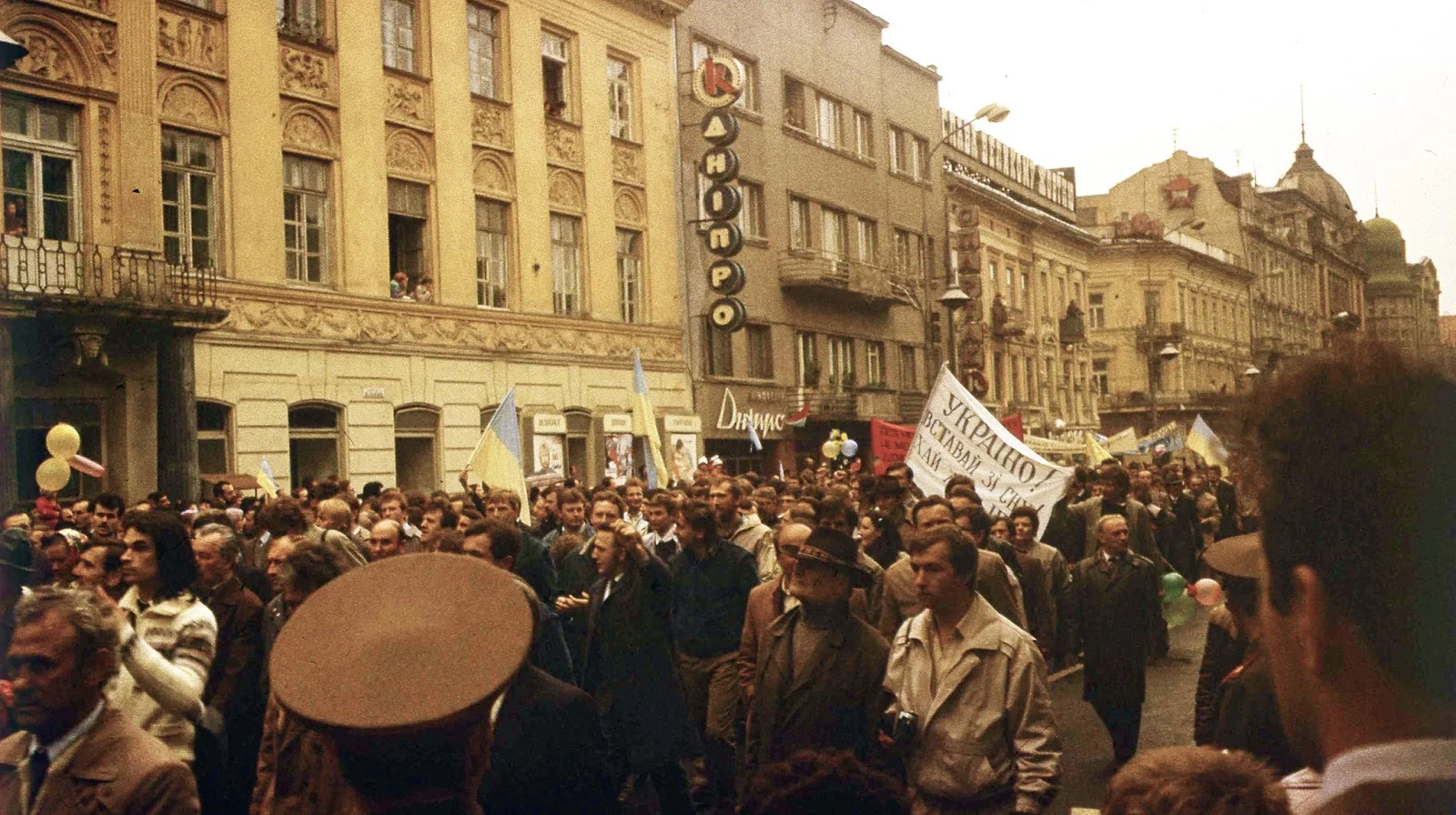
In the late 1980s, a group of young idealists undertook one of the first efforts to resurrect social democracy on Ukrainian soil. Discover the history of this endeavour in our feature.
-
 # Social democracy
Dorothy Emmet and the Moral Foundations of Social Democracy
A forgotten pamphlet from 1985 explains why it is impossible to develop a moral policy through decrees alone.
-
 # Interview
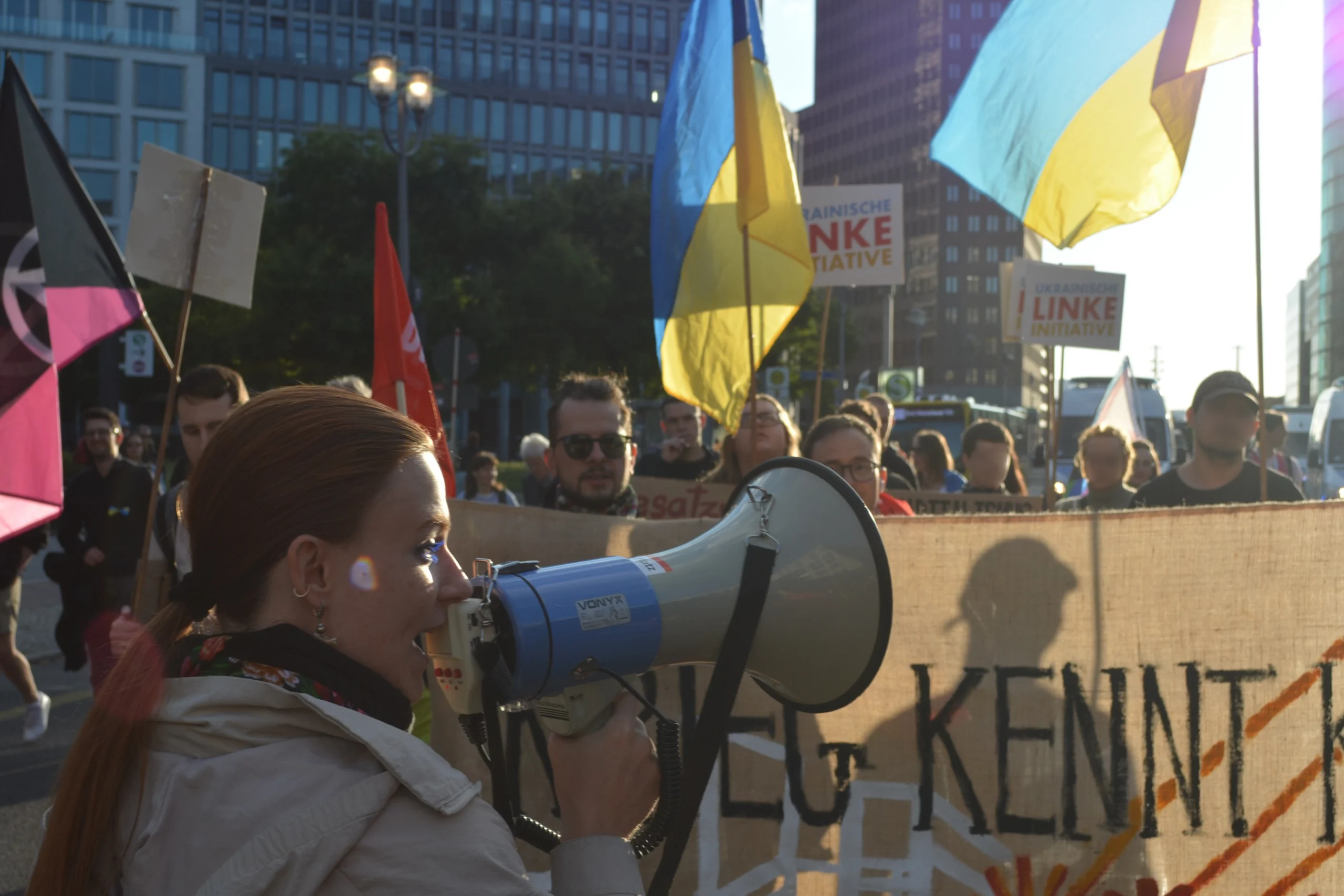
The Ukrainian Leftists Trying to Change Die Linke
What is the Ukrainian Left Initiative — and how is it changing Germany’s Die Linke's stance on Ukraine today? We discussed this and more with ULI activist Mykhailo Mustafin.